
An eco-tourism experiment
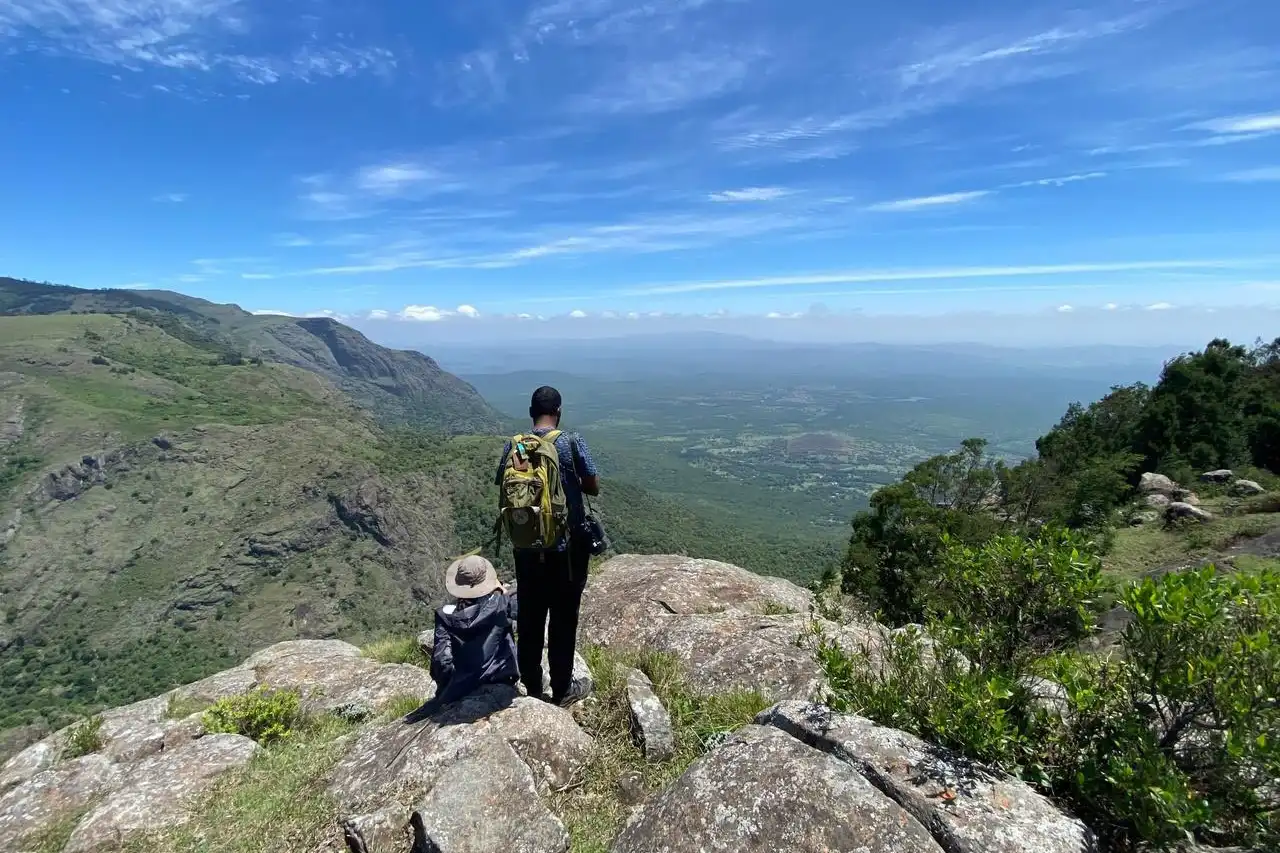
The year was 2011. I had just started my new life as a lodge naturalist (an intern then) at a property in Satpura, an eco-tourism experiment like no other. Starting my journey here would shape me in more ways than I could comprehend then. This hilly mixed deciduous forest, popularly known in local literature as ‘’Satpura ke ghane jangal’’ was going to be my first jungle home and would remain so for the next five years. The animals of Satpura, in 2011, were still not used to people or jeeps, tigers proved to be extremely hard to find, the hilly terrain and the gorges kept the scattered herds of sambar, gaur and other smaller creatures well hidden. Meadows with large herds of spotted deer, a norm in most of our tiger parks, were almost nonexistent here. Sloth bears and rusty spotted cats were the stars then. This park was surely the odd one out in the landscape of Kanha, Pench, Bandhavgarh and Panna. But what truly set Satpura apart was the freedom to explore the tiger reserve on foot.
Trying to be a walking guide
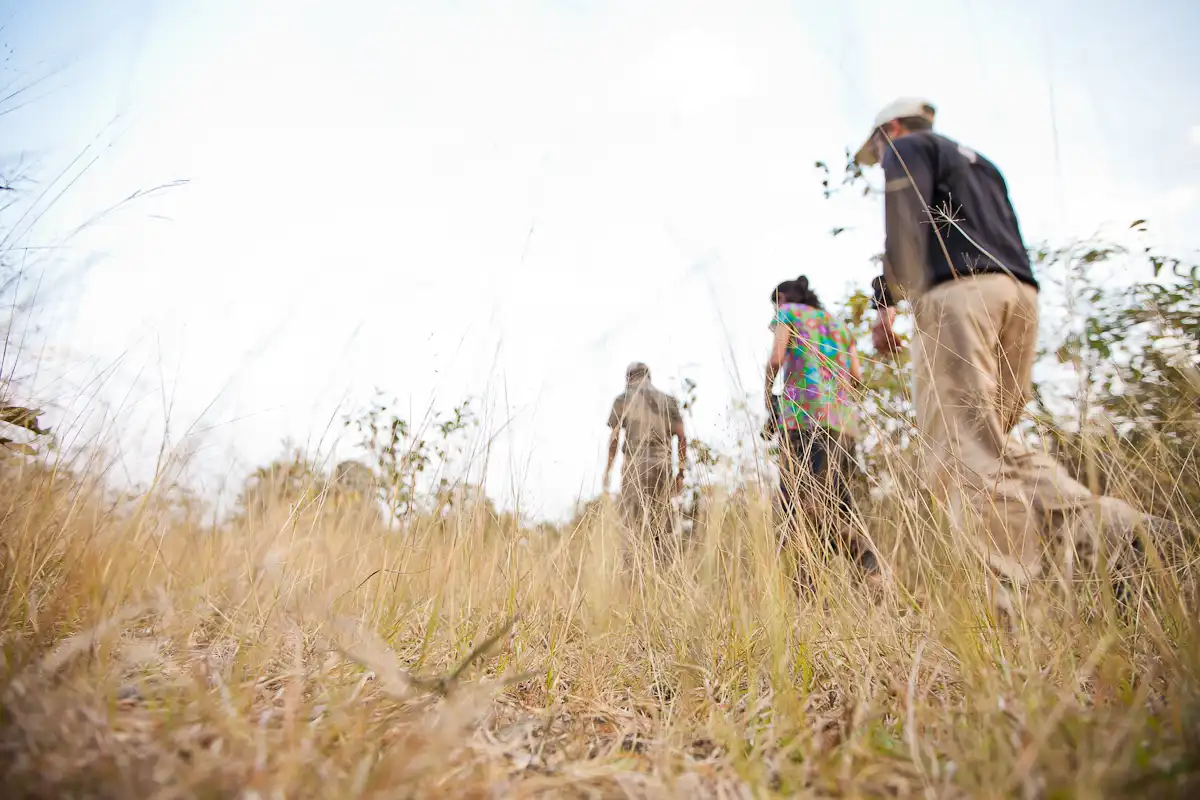
Engaging guests in walking safaris through the trails in the park was how I started out. At the start I felt many emotions, high amongst them was frustration. I could see naturalists in other parks posting pictures of big cats and other enigmatic wildlife on a daily basis and here I was trying to engage people with leaves, butterflies, jungle sounds and the occasional rear end of an ungulate. To put things in context, at this juncture I was just learning the basics- mammals, birds, trees and insects. The biggest incentive for me at the start was the fact that I started losing weight.
Keeping people excited on walks, even keeping one’s own self excited, in fact the very act of walking the trail was a skill of its own. I began with shortcuts as most Indians would, fixing exciting markers- a large mahua tree, a nightjar roost, a bee hive, two-tailed spiders, a bush with an interesting story, an interesting conglomerate rock, even leaving tracks and signs uncontaminated for the next walk, this helped me keep the momentum on my walks. The list grew larger with more walks, questions from guests, a growing curiosity and some forced reading. I started noticing seasonal changes in the markers, new leaves on trees, flowering and fruiting, bursts in insect and bird life around certain plants, caterpillars, even the patterns of movement of the resident leopard that I never saw or the dynamics of the langur troop that used the tall thin teak grove to stay safe from the cat. I walked the same two walking trails of Satpura over 100 times every season for five years. It was a love affair of sorts. The markers, the vistas and the creatures on this trail became the representation of the park for me. I felt more connected with the park in this footpath than anywhere else in the tiger reserve.
A love for the trails
It’s quite interesting what draws people to the wilds. For many it could be the individual stories of big cats of the park, for some it’s the birds or the overall beauty of the park. For me it has been one or two select trails. From Pelia and Sonbadhra in Satpura, the walk around the property I worked for in Kanha, the cycling track near Jamtara in Pench, a cardamom plantation trail in Munnar, Spango valley, below Snow Leopard Lodge in Ladakh or the narrow trail along the Narmada canal in Dasada. Being on foot on these trails, seeing the familiar, noticing the subtle changes, this was as intriguing to me as was exploring the entirety of the landscape.
Naturally, this was exactly what I was looking for around home wherever it was going to be – a daily walk that was a slice of the region, a sample space and access to a set of individual creatures to become familiar with.
Home in the Nilgiris
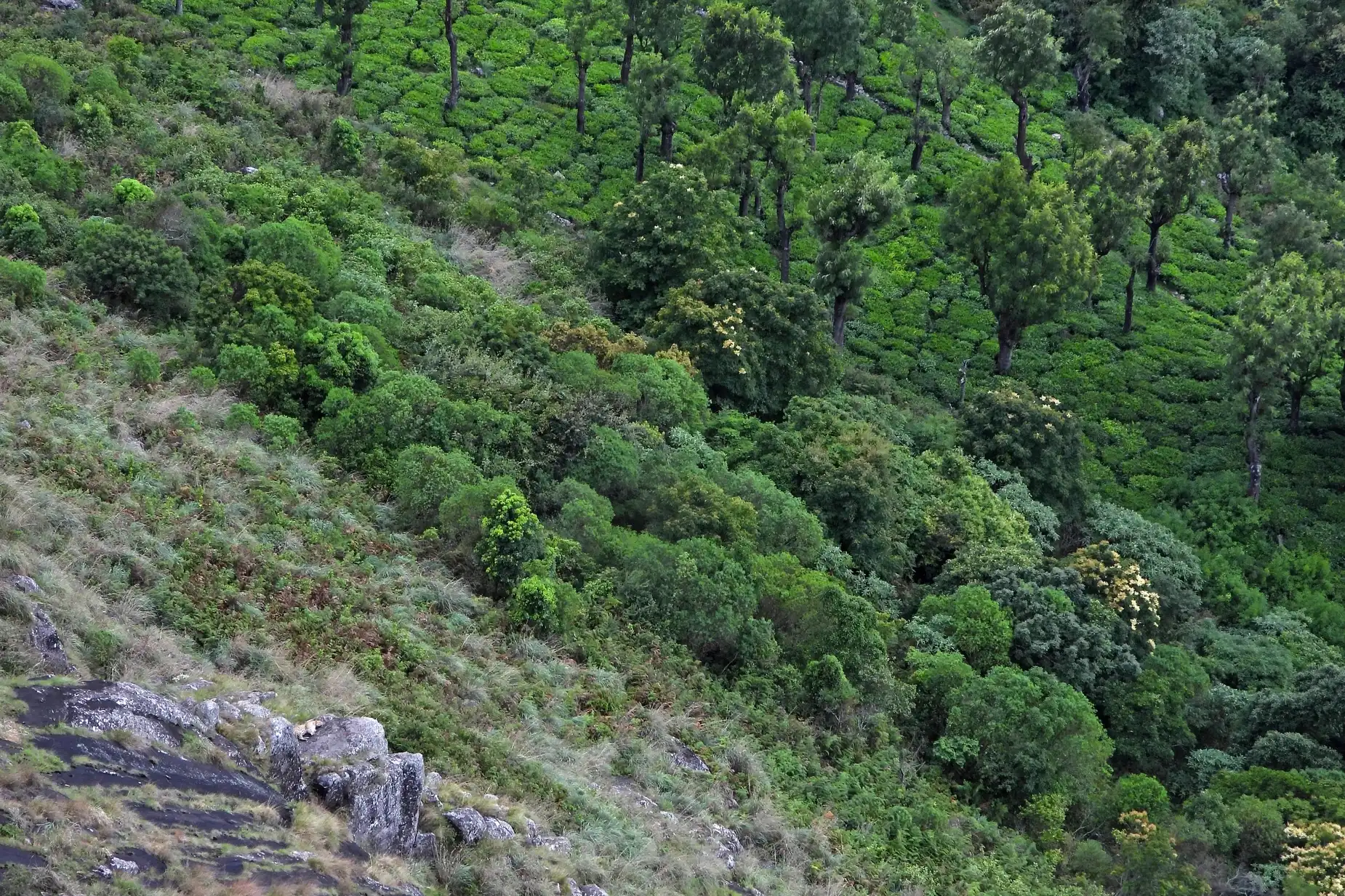
The Nilgiris, an isolated massif of the Western Ghats, was a place I had been going back to year after year. It was a place my partner and I connected with in many ways- the wilderness, the vistas, the history, the cosmopolitan societies and of course, our many friends. We decided to rent a place there in 2019 and found the perfect small house that we could afford. It was situated at the edge of a small village surrounded by tea estates, wattle and eucalyptus plantations, and valley forests. These secondary habitats supported wildlife that had adapted to the new surroundings and mastered the art of remaining hidden.
The Backyard Trail
Day one and we decided to take our first walk through the surroundings. Our neighbour mentioned a trail leading up the hill through the adjoining tea patch. Within the first five minutes we noticed scrape marks and tracks of a large male leopard. It was a random trail that led up the valley through tea and wattle plantations and overgrown raspberry vines before eventually ending up on a rocky ridge. Bear droppings was scattered all around the tea garden. The estate workers we came across warned us about bears and shared many a story of how they can hide behind even the smallest of tea bushes. Luckily we didn’t come across any on that walk. The calls of the Nilgiri chilappan seemed to come from every dense thicket. Peering through the bushes we even found the endemic Nilgiri sholakili. We meandered along the trail, stopping for everything from skittish southern rock agamas, dragonflies, a few native trees, porcupine quills, civet droppings with Elaeocarpus seeds (was it the toddy cat or the brown palm civet?) and signs of many creatures, including a faint track that could have likely been that of a tiger. At the top, the windswept flatland restricted vegetation to stunted bushes and rocks covered with lichens. We noticed a small raptor perched at the edge of a precipice overlooking the valley below. The shaheen falcon dived into the vastness as soon as it saw us. A closer look at the rock showed us large patches of white stains – raptor poop. It was a regular perch. We sat up there for a bit, taking in the surrounds of our new home, discussed the things we saw and walked back home before sundown.
The trail we took didn’t lead through dense jungles and sholas or grasslands. But it had all elements that we associate with the Nilgiris- tea estates, villagers’ busy plucking tea, wide vistas, endemic birds and a surprisingly healthy number of well-hidden enigmatic wildlife. And a raptor roost to top it all. This walk cemented our connection with our new surroundings. Our joy on this discovery was short-lived as we left back to work in Central India and Ladakh. But what we didn’t know then was that things were about to change big-time for all of us.
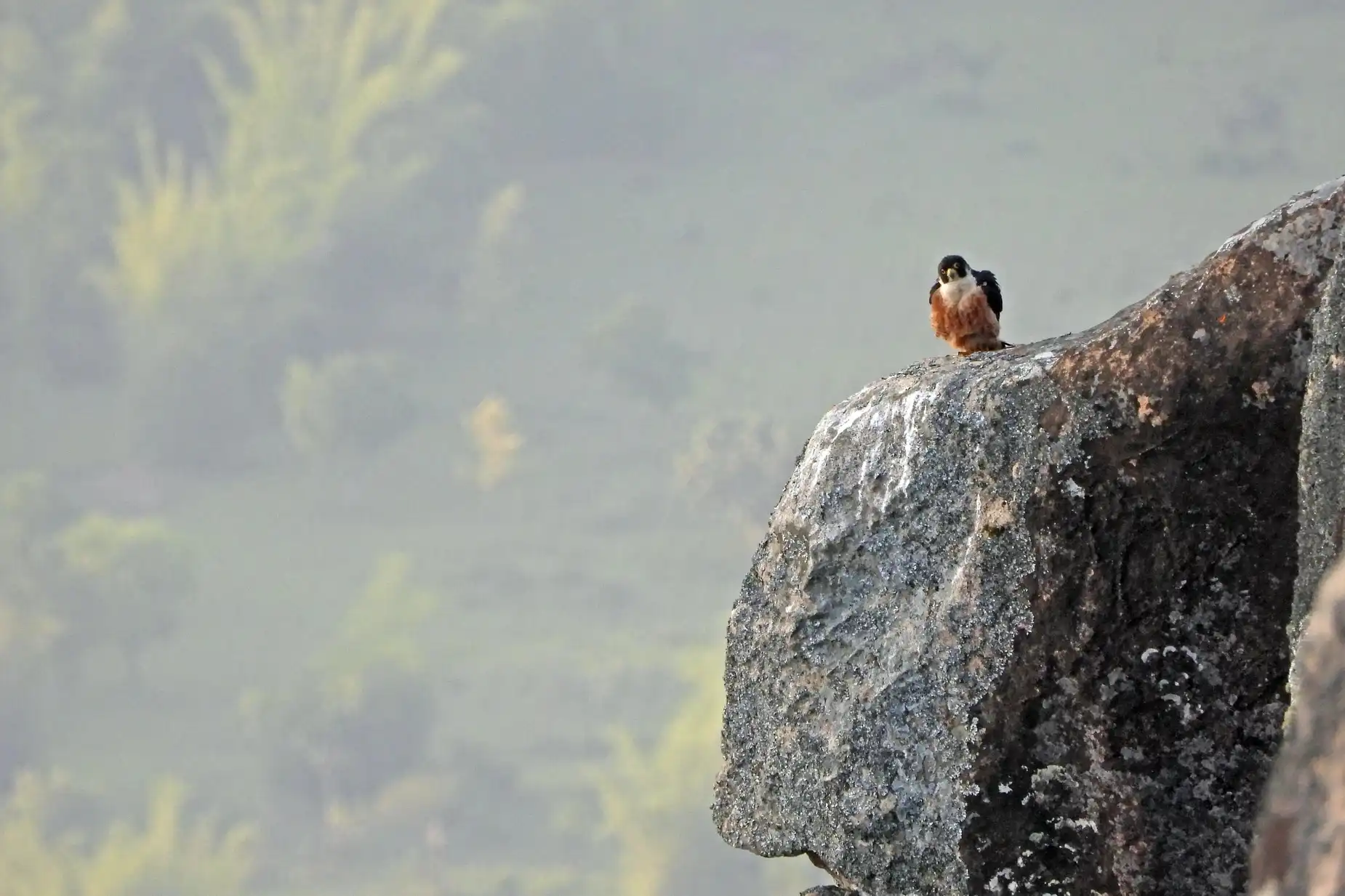
Locked Down in our corner of the Nilgiris
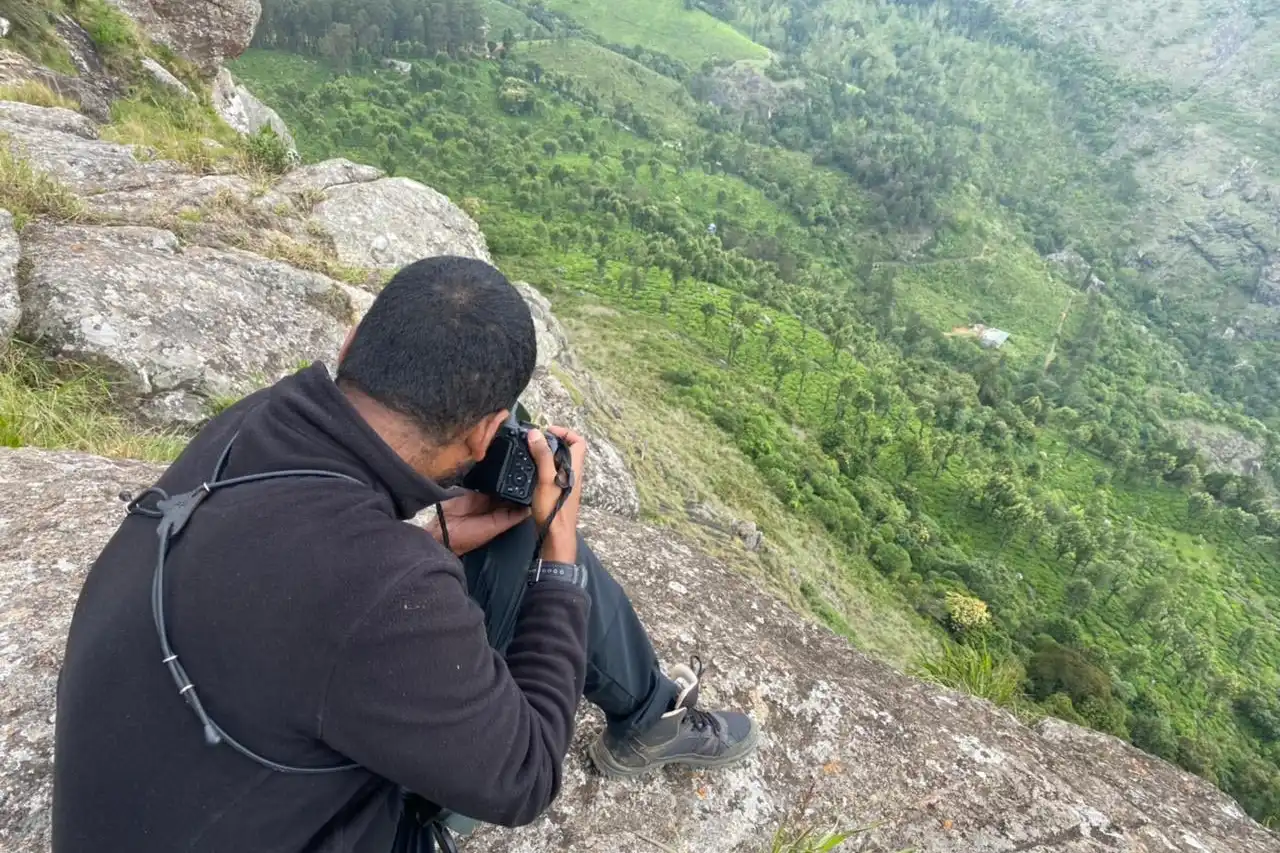
The unfortunate turn of events in 2020 sent us back home and restricted us to our corner of the Nilgiris for almost two long years. It was a strange time for us since the norm of our life as wildlife guides was constant travel. After the initial few weeks of watching news, worrying about the uncertainty and a short period of drowning in self-pity, we decided to start walking. Initially it was one walk a day at sundown. It started with watching the blackbirds, the nesting munias and loud bulbuls around home followed by looking for signs of the leopards and bears, peering through foliage to look for black and orange flycatchers, checking on the sholakili by the streamside and finally ending up at the top to observe the antiques of the shaheen pair. We did this every day, sometimes more than once, for six months.
This was a form of meditation, an exercise in slowing down and knowing more. While earlier, we travelled to broadly understand species and habitats across the country here we were trying to figure out individuals. From the black eagle that soared past home every day to the leopards and sloth bears, the nesting shaheen falcons, the flock of painted bush quails and even the Nilgiri marten that surprised us from time to time, with every walk we learnt more about each of them. Every creature left a piece of their story, a puzzle for us to solve while on the trail. On certain days, we would just sit on the top and watch the monsoon clouds envelope the valley below. The way they rose up the valley, danced and disappeared. It was definitely my greatest connection yet with any patch of wilderness since the time I first set foot to work in a jungle.
Today, even though we don’t live in the same area, we make it a point to walk that trail every chance we get. It is our way to reconnect with the Nilgiris after a long absence. It is a sliver of wilderness that we’re most familiar with. Every tree, every rock, every turn… we could walk it with blindfolds. We have had some of our most incredible moments in the wild while here. This is a list of individual animals, plants and insects that we look for every time and know better than anyone else. This unassuming footpath, overlooked by most, is the trail that I will cherish forever.
More Stories
Land of the Firefox – An expedition into the Eastern Himalaya
Join Our Mailing List
Subscribe to receive our latest updates in your inbox!